Our Process for Optimizing your Content for AI & Voice Search
How we Create AI & Voice Search ready content for your online success Explore Our AEO ServiceAnswer Engine Optimization (AEO) for AI & Voice Search
Optimizing Content to Be Selected, Cited & Spoken by AI Systems
This service prepares website content to be selected, summarized, and cited by AI systems and voice assistants.
We focus on structuring information as clear, self-contained answers supported by strong context and semantic signals.
The objective is to improve how your content appears in AI-generated responses, featured snippets, and spoken search results.
1. Answer Opportunity & Intent Audit
We begin by identifying key user questions, problem statements, and informational intents related to core services.
We audit existing content to assess answer clarity, completeness, and extractability for AI systems and voice assistants.

2. Question Entity & Competitor Analysis

We research high-frequency questions, conversational queries, and related entities.
We analyze 2–5 competitors to understand which answers are being surfaced in featured snippets, AI summaries, and voice results, and identify content gaps.
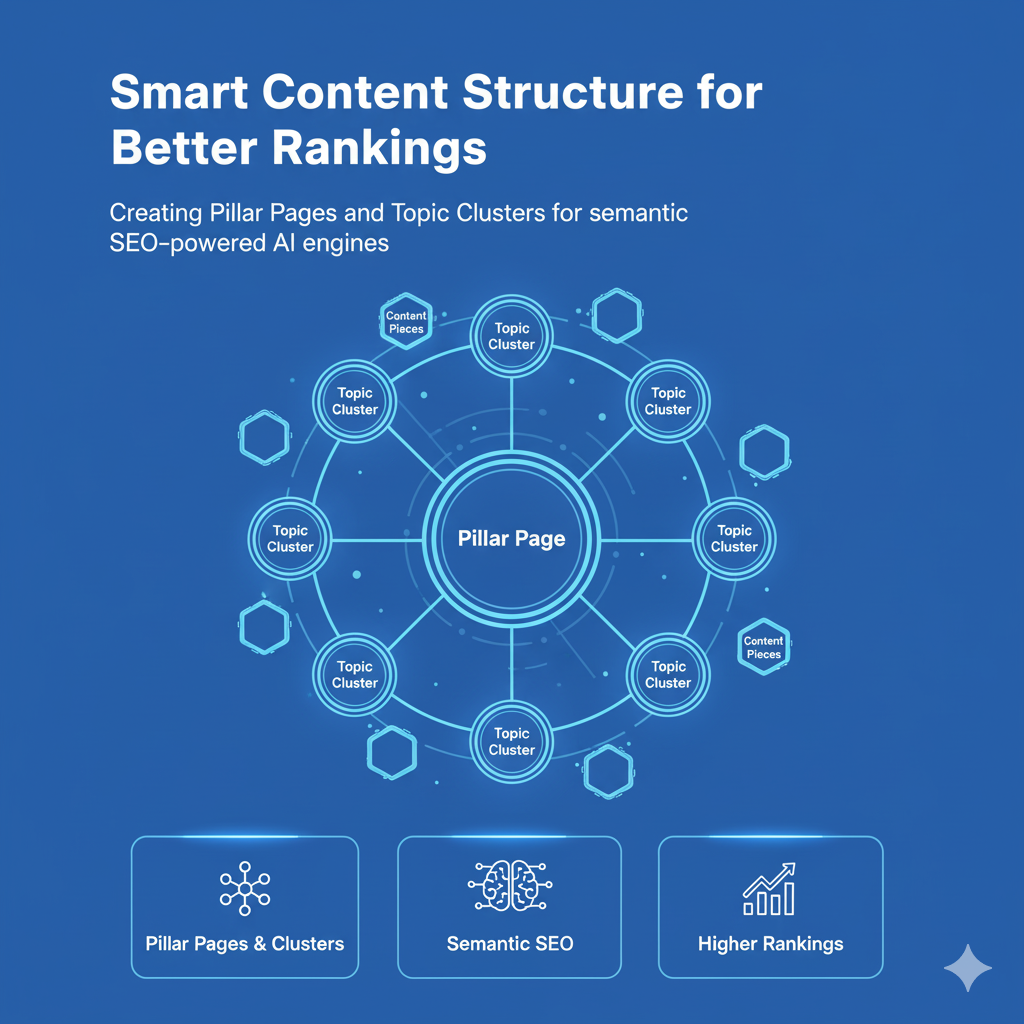
3. Answer Mapping & Content Structuring
We map each priority question to dedicated content sections, FAQs, and Q&A blocks.
Headings, subheadings, and paragraph structure are designed to support direct answer extraction and contextual understanding.
4. AEO-Focused Content Writing & Rewriting
We create or rewrite content using clear, concise, and self-contained answers.
Language is structured to address “what”, “why”, “how”, and “which” type queries in a format suitable for AI-generated responses and voice delivery.
5. On-Page Technical & Semantic Optimization
We optimize headings, internal anchors, contextual keyword placement, and entity references.
Semantically related terms and supporting concepts are added to strengthen topical authority and machine understanding.

6. Schema Markup & Structured Data for Answers
We implement FAQ, HowTo, QAPage, and other relevant schema to improve answer eligibility, clarity, and citation by search engines, AI platforms, and voice assistants.
7. Validation & Answer Readiness Review
We review all optimized content for answer completeness, context independence, schema accuracy, and voice-readability.
This ensures the website is prepared for answer engines, AI summaries, and voice-based query responses.
By following this structured AEO process, website content is prepared to deliver clear, self-contained answers supported by strong context and semantic signals.
This increases the likelihood of AI platforms and voice assistants choosing and citing the website as an authoritative source in AI-generated responses.
Frequently Asked Questions
How do you begin the Answer Engine Optimization process?
We start by identifying the key questions, informational needs, and problem statements users search for through AI systems and voice assistants. We audit existing content to evaluate answer clarity, completeness, and extractability.
Do you analyze competitor answers and AI results?
Yes. We study how top competitors appear in featured snippets, AI summaries, and voice results. This helps us understand the answer formats, content depth, and question coverage that AI systems currently prioritize.
How do you structure content for answer extraction?
We organize content into clear question–answer sections, logical headings, and self-contained explanatory blocks. This structure enables AI engines to easily identify, extract, and reuse answers in generated responses.
How is content written or rewritten specifically for AEO?
We create and refine content using concise, context-rich, and direct answer formats. Each answer is designed to address “what”, “why”, “how”, and “which” type queries in a way that is suitable for AI summaries and voice delivery.
Do you apply technical and semantic optimization as part of AEO?
Yes. We optimize headings, internal anchors, contextual keyword usage, and entity references. Semantically related terms and supporting concepts are added to strengthen topical authority and machine understanding.
How do you use schema markup for answer optimization?
We implement structured data such as FAQPage, HowTo, QAPage, and other relevant schema types. This helps AI systems and search engines clearly identify answer blocks and improve eligibility for citation and voice responses.
How do you validate that content is ready for answer engines and voice assistants?
We review all optimized pages for answer completeness, contextual independence, schema accuracy, intent alignment, and voice-readability. This ensures the content is prepared to be selected, summarized, and cited by AI platforms and voice assistants.